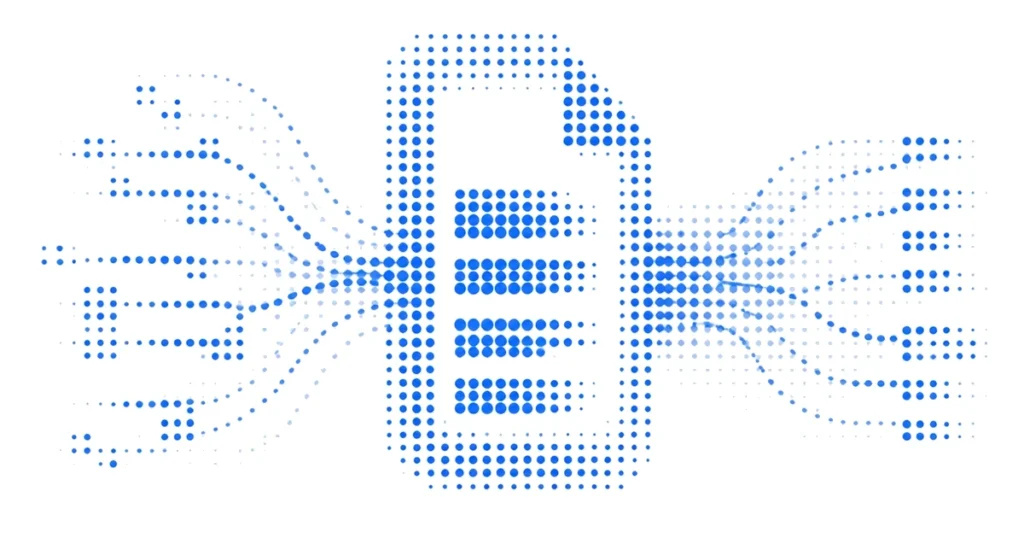
When a model returns an answer with protected references still in place, the workflow is not finished. An approved component must reconnect those references to the right customer, clause, circuit, or ticket and deliver the result to the intended system. The architecture decision therefore extends beyond what gets removed or replaced before the model call.
An LLM Capsule vs Limina comparison is most useful when it begins with that return path. Limina, formerly Private AI, and LLM Capsule both document protected model workflows with a post-model return step. They organize the processed representation, retained mapping state, and return authority differently. This comparison follows those operating contracts rather than declaring a universal winner. The useful question is which data path preserves the context a specific task needs, keeps reconnecting state in the approved location, and leaves enough evidence for the architecture team to approve the full round trip.
Key takeaways
- Private AI is now Limina; current comparisons should use the new name while identifying the former name once for continuity.
- Limina is not limited to irreversible redaction. Its current documentation covers redacted, masked, or synthetic output and an LLM workflow that uses entity mappings for reidentification.
- LLM Capsule’s documented pattern creates a substituted working version and restores original values through a protected mapping inside the customer-controlled environment.
- Compare the retained mapping state, return executor, deployment path, authorized destination, and failure evidence rather than relying on product-category labels.
- Approve one named configuration for one real workflow. Neither architecture proves security, compliance, or production readiness on its own.
Start with the return-path decision
A privacy component can remove a name successfully and still leave the application unable to use the model’s answer. The output may refer to the wrong repeated entity, lose the relationship between a field and its label, or return to an application that is not authorized to restore the original value. These are return-path failures, not detection failures.
Before comparing products, define one representative task. A contract workflow might need to compare renewal clauses while preserving supplier identity, page references, dates, and amounts. A network-operations workflow might need to keep circuit IDs, topology nodes, tickets, and changes distinct through the model response. The review should identify:
- the source records and values that require protection;
- the relationships the model needs to complete the task;
- the representation allowed to follow the approved model path;
- the state retained to reconnect the result;
- the caller permitted to use that state;
- the final application or record that may receive the usable output; and
- the logs, retries, caches, and errors created along the way.
This inventory prevents a category label such as deidentification, redaction, or context preservation from standing in for an actual architecture review. The LLM Capsule glossary can help orient readers to adjacent concepts, but the deployment decision still depends on the exact data path.
How Limina processes and reidentifies text
Private AI officially rebranded as Limina in March 2026. The company says the rebrand did not change its product, API, features, or deployment options. Current copy should use Limina as the product name, while formerly Private AI preserves the connection to older documentation and search intent.
Limina’s current Process Text documentation describes an entity-detection step for PII, PHI, and PCI in text. The processed output can use redacted markers, masking, or AI-generated synthetic entities. The response also contains detected-entity information and the processed text. Exact entity coverage, language support, configuration, and performance depend on the selected product version and deployment and should be verified separately.
The current LLM Prompt Redaction guide adds the return path. Its example runs a Limina container, creates entity mappings during redaction, sends the processed prompt to a model, and calls a reidentification function after the response returns. In that documented pattern, the calling application passes the processed text and entity mappings into the reidentification operation.
The documentation rules out two shortcuts in the comparison. Limina is not merely a one-way redaction tool, and its deployment does not necessarily require an external privacy service. Limina documents local-container and in-stack deployment patterns as well as cloud routes. The architecture team must inspect the exact licensed product, endpoint, mapping location, caller, and network topology under consideration.
How LLM Capsule restores original values
LLM Capsule is a context-preserving data layer for AI. Its current target architecture sits between operational systems and an approved model path. It creates a substituted working version while original values and the protected mapping remain inside the customer-controlled environment.
The model works on that protected version. When the response returns, LLM Capsule uses the local protected mapping to restore original values inside the environment where the workflow began. The restored output then continues to an authorized ticket, report, record, or other workflow destination. Current LLM Capsule Architecture also places policy-based routing and operational records around that path.
Both products document a post-model return mechanism, so reversibility alone does not distinguish them. LLM Capsule’s documented contract centers on a substituted working version, local restore, workflow policy, and downstream delivery as one adjacent data layer. The architecture review still has to prove that the deployed route matches that target design.
It should verify:
- which fields and customer-defined operational markers the policy protects;
- which relationships and references remain usable in the working version;
- where originals and the protected mapping are stored;
- which workflow, caller, and policy scope may request a restore;
- what happens when a reference is missing, altered, duplicated, expired, or outside scope; and
- which destination receives the restored output.
These are bounded product and deployment questions. They do not establish that every model, document type, relationship, or integration is supported.
Compare the operating contract, not the label
The table below is a review aid, not a feature ranking. It compares the currently documented patterns at a level useful for architecture planning. Replace every generic label with the exact version, deployment, caller, mapping store, policy, and destination used by the proposed workflow.
The table exposes why a single “supports reidentification” check is not enough. Two systems may both return original values while assigning different responsibilities to the mapping store, application, policy layer, and destination. Those responsibilities determine what the team has to secure, test, and audit.
Choose by workflow fit
Limina may fit a workflow when the primary job is entity detection and the selected redacted, masked, or synthetic representation preserves enough information for the task. Its documented reidentification pattern gives the calling application an explicit role in reconnecting processed entities after the model responds. The team should verify that this contract handles the model’s actual output changes and the application’s authorization requirements.
LLM Capsule may fit a workflow when the task depends on a substituted working version that keeps supported operational relationships usable, followed by local restore and delivery back into the originating workflow. The decision should be based on one real source-to-destination path rather than a general preference for structure preservation.
The approaches are not necessarily mutually exclusive at every layer. An organization could evaluate entity detection as one component inside a larger protected workflow. That composition is an architecture possibility, not a documented integration claim. It requires its own evidence for data handoffs, mapping state, policy ownership, error behavior, and support boundaries.
A useful selection rule is:
- choose the transformation that preserves the minimum context the task genuinely needs;
- keep reconnecting state in a location and lifecycle the organization can approve;
- assign the return operation to an authenticated component with a bounded scope;
- prove the final write to the intended workflow destination; and
- retain enough sanitized evidence to reproduce failures and authorization decisions.
Test one complete round trip
Run the comparison against the same representative workflow. Use the same source record, model task, expected output, destination, and acceptance criteria. Record the exact product version, configuration, deployment route, mapping state, caller, and policy for each implementation.
Include valid and failure cases for:
- repeated and distinct protected references in one request;
- reordered references or rewritten surrounding text in the model response;
- a missing, partial, duplicated, altered, or invented reference;
- an expired mapping or entity state;
- a caller outside the approved identity, tenant, session, or workflow scope;
- a timeout before or after the return operation;
- a rejected downstream write, retry, or duplicate delivery; and
- logs, traces, caches, error payloads, and support artifacts that could retain sensitive state.
The evidence should connect the source request, processed representation, model and version, mapping scope, return decision, delivery event, final stored result, and rollback action. A successful response in a test console proves only that one request completed. It does not prove that the intended workflow received the correct authorized result or that failure paths stayed within the approved boundary.
Make the decision at the configuration level
The final decision should name one workflow, product version, deployment topology, transformation policy, model route, mapping store, caller, and destination. It should also specify which changes trigger reassessment. A new entity configuration, output representation, model, endpoint, mapping lifecycle, application, or observability path can change the operating contract even when the vendor name stays the same.
Compare Limina and LLM Capsule as deployed mechanisms with specific operating responsibilities. Limina’s current documentation supports a more complete description than the legacy redaction-only shorthand. LLM Capsule’s current architecture makes a specific claim about the substituted working version and in-environment restore, but that claim still requires deployment evidence.
For the LLM Capsule path, use the current Architecture to map one real request from source through the approved model route and back to its authorized destination.