



Definition
Core Concepts3

What is a context-preserving data layer for AI?
A context-preserving data layer sits between an organization's sensitive data and an AI model. It transforms sensitive values into a structure-preserving form…
Enterprise AI Enablement
A guide to enterprise AI enablement: how LLM Capsule works as a context-preserving data layer that substitutes sensitive elements with structure-preserving representations,…
What Is an AI Data Capsule?
An AI data capsule wraps sensitive enterprise data as structure-preserving substitutes, lets any external LLM process it, and restores the original values…
Differential Privacy1
Differential Privacy for Enterprise AI: What It Is, Why It Matters, How It Applies to Operational Data
PII filtering reaches the names. Differential privacy reaches the patterns. Why differential-privacy-based protection is the technical foundation of the AI enablement data…
Techniques & Workflows4
Context-Preserving Data Layer Evaluation Checklist
Evaluate one complete AI request-response round trip to verify where originals stay, what crosses the model path, how context survives, and how…
Enterprise AI Document Processing
How enterprises run AI on sensitive documents (summarization, extraction, classification, translation, and RAG) using structure-preserving substitution and local restore so the outputs…
How a Restorable Workflow Runs in Production
An AI enablement pattern in which sensitive enterprise data is replaced with reversible, structure-preserving representations before AI processing — enabling LLM Capsule…
Structure-Preserving Document Processing
Why keeping document structure intact during data transformation is critical for accurate AI outputs in enterprise workflows.
Architecture
Execution & Deployment9

Air-Gapped LLM Deployment: A No-Outbound Operations Checklist
An operating checklist for deploying and maintaining one fully internal LLM workflow without an unapproved outbound connection.
External LLM Approval Checklist for Sensitive Data
A service-level approval checklist for using an external LLM with sensitive enterprise workflows without sending restricted original values through the model route.

Data Residency Is Not Enough: What Crosses the Model Layer
A practical data-boundary review for teams using AI in an approved region: inspect the payload, derived artifacts, model route, logs, and return…
On-Prem LLM Execution Path: Air-Gapped, Hybrid, and In-Region AI for Regulated Operations
Two execution paths inside a single AI enablement data layer. When external transmission is not an option, the on-prem local lightweight model…
Sovereign AI for European enterprises — a practical architecture
Bring AI into regulated European workflows under GDPR, EU AI Act, and national data residency — without choosing between productivity and compliance.
Running External LLMs on Data Your Company Can’t Send Externally
Most enterprise AI workflows stall when external LLMs require data the company can't expose. A look at the architectural patterns that move…
How to Use AI on Sensitive Enterprise Data
Learn how to run large language models on sensitive enterprise data while the original values stay inside your environment. Substitute locally, process…
On-Premise vs Cloud AI Data Protection
Compare on-premise, air-gapped, cloud, hybrid, and embedded deployment models for running AI on sensitive enterprise data.
Secure Enterprise AI Data Workflows
Complete guide to enterprise AI data privacy: how to keep sensitive data inside the trust boundary throughout AI processing while producing usable,…
Restoration & Data Handling4
Deterministic Reconstruction: How to Test the AI Return Path
A practical acceptance-test plan for deterministic Reconstruction across valid output, failure cases, authorization, scope, and downstream delivery.
Tokenization for LLM Inputs: How AI Reads What It Doesn’t See
The architectural choices that make pre-LLM structure-preserving substitution work in production: deterministic vs randomised stand-ins, format preservation, mapping storage, and the questions…
Reconstructing AI Output: The Last Mile Between Model Response and Business Reality
An external LLM returns its response with substitute markers still in place, so it is not business-ready yet. Reconstruction is what turns…
AI Data Pipeline Protection
AI data pipeline protection means keeping sensitive data usable across every stage of enterprise AI: ingestion, structure-preserving substitution, processing, restore, and delivery…
Worked Deployments6

How to Run RAG on Documents That Cannot Leave
A boundary-first architecture for RAG on restricted documents: protect source content, chunks, retrieval context, prompts, citations, and the return path.
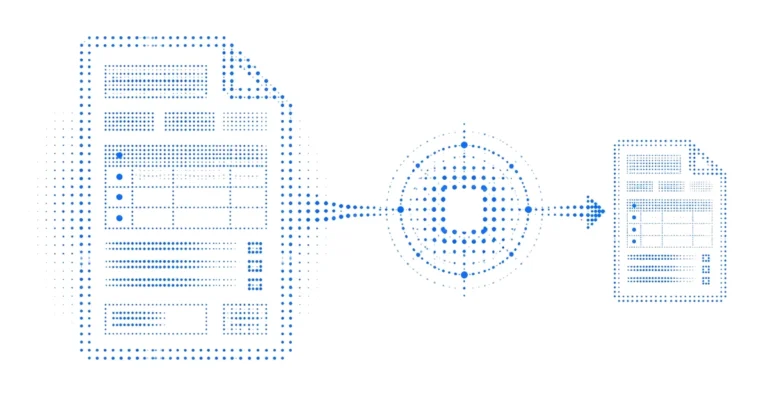
Enterprise PDF AI: Preserve Fields, Layout, and References
A workflow checklist for using AI on enterprise PDFs while preserving field identity, page structure, tables, references, and the authorized return path.
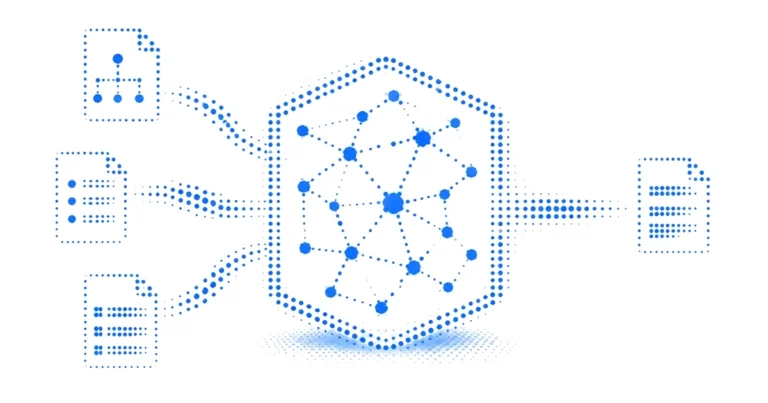
AI-Ready Topology, Tickets, and Runbooks: A Cross-System Context Checklist
A cross-system checklist for preserving identity, topology, time, ticket, change, and runbook relationships when AI assists network operations.
AI-Ready NOC Incident Data: A Relationship-Preservation Checklist
A practical checklist for preserving entity, topology, time, ticket, provenance, and return-path relationships in NOC incident data prepared for AI analysis.
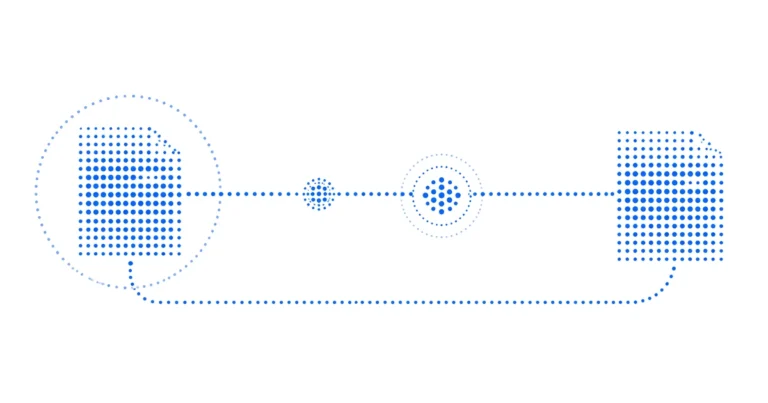
How to Run AI on Circuit IDs Without Exposing Raw Values
Trace one circuit ID through protected input, an approved model path, authorization checks, and in-environment restore without exposing the raw value.
How to deploy AI in a telecom NOC without exposing network data
A practical guide for telecom operators bringing AI into the NOC, OSS/BSS, and customer operations — without exposing subscriber identities, call records,…
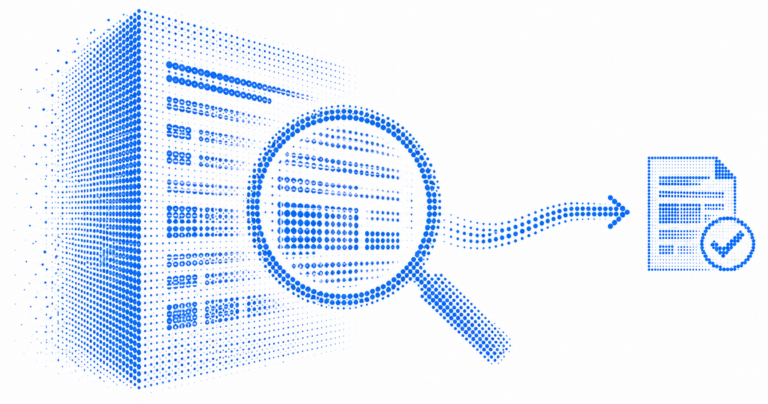
Operational Marker Detection: A Coverage Checklist
Validate operational marker detection before an AI workflow sends data through its approved model path, then test the protected return path.
Comparison
LLM Capsule vs Alternatives8

LLM Capsule vs Cloud DLP: Where Each Control Ends
Compare LLM Capsule vs Cloud DLP across discovery, policy enforcement, the protected model path, restore, and authorized delivery.

LLM Capsule vs Presidio: Comparing AI Data Return Paths
Compare LLM Capsule and Presidio across detection, protected representation, return authority, deployment ownership, and AI workflow delivery.

LLM Capsule vs Limina: Re-identification Approaches Compared
An architecture comparison of Limina's documented deidentification and reidentification pattern with LLM Capsule's substituted working version and local restore path.
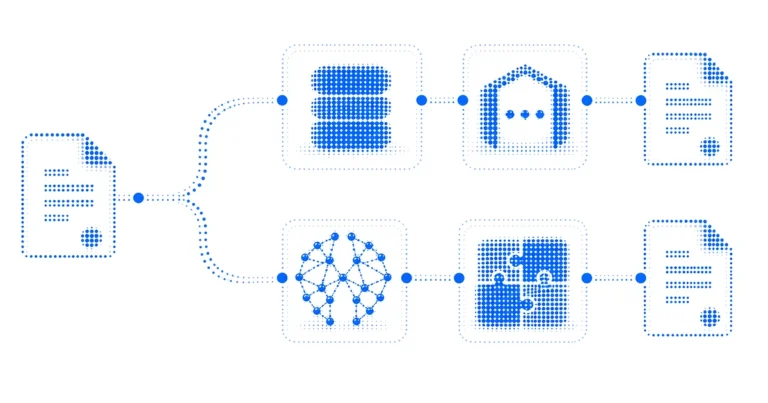
LLM Capsule vs Skyflow: Re-identification Inside Your Environment vs by API
Compare the Skyflow data privacy vault with LLM Capsule across deployment models, return APIs, mapping location, and in-environment restore.
On-Prem Alternative to Cloud PII Vaults
Compare a data privacy vault with local restore across original values, mappings, model traffic, telemetry, failures, and the AI return path.
LLM Capsule vs Masking Tools
How LLM Capsule's structure-preserving substitution compares to masking and redaction tools for enterprise AI workflows, and why outputs you can restore matter…
LLM Capsule vs Prompt Security Gateways
Compare LLM Capsule with prompt security gateways. Gateways filter at the API layer; LLM Capsule works as a context-preserving data layer, replacing…
LLM Capsule vs Synthetic Data Platforms
Compare LLM Capsule with synthetic data platforms for enterprise AI. Synthetic data replaces real data entirely; LLM Capsule keeps real enterprise data…
Approach Comparisons4

Reconstruction vs Detokenization vs Manual Redaction
Reconstruction vs detokenization compared across mapping location, authorization, output handling, manual redaction, and the complete AI return path.
Local Restoration vs Anonymization
Compare local restoration with anonymization for enterprise AI. Anonymization is permanent and cannot be recovered; local restoration keeps original values inside your…
PII Protection vs Enterprise Confidentiality Control
Why protecting only personal data is insufficient for enterprise AI enablement. Business-critical information requires enterprise confidentiality control to truly enable AI adoption.
Structure-Preserving Processing vs Flat Masking
Compare structure-preserving processing with flat masking for enterprise AI. Flat masking collapses document structure; structure preservation maintains integrity for accurate AI outputs.
Why Legacy Methods Break3
PII Guardrails vs Operational Data Protection
OpenAI Guardrails, AIM Intelligence, Tynapse, prompt security gateways — they all do something important. They do not all do the same thing.…
Why AI Workflows Stall at Tables, Tickets, and Operational Documents
PII guardrails and field-level masking solve the easy half of the problem and break the rest of the workflow. A look at…
Why Redaction Breaks Enterprise AI Workflows
Masking and redaction tools destroy the data context that AI models need. Enterprise AI requires structure-preserving processing with restorable outputs.
Strategy
Pilot to Production2
Why enterprise AI pilots stall — and how they get to production
A diagnostic for executives, CDOs, CAIOs, and CIOs whose AI pilot has run for months without reaching production.
Where to Run Enterprise AI: External, On-Premise, or Both
The deployment question for enterprise AI isn't binary. External LLMs, on-premise models, and hybrid topologies each fit a specific class of workflows…
Build vs Buy1
The Hidden Cost of Building Your Own Enterprise LLM
Self-hosting an LLM is a defensible choice — but the cost structure is asymmetric and most projections miss it. The model itself…
Industry
Industry Deployments2
How to deploy AI in a hospital without exposing PHI
A practical guide for hospital CIOs, CMIOs, and clinical informatics teams to bring AI into radiology, clinical documentation, and care coordination —…
AI on Network Operations Data: Protecting Asset Identifiers in NOC Workflows
Two execution paths inside a single AI enablement data layer. When external transmission is not an option, an on-prem local lightweight model…
No articles match the current filters.