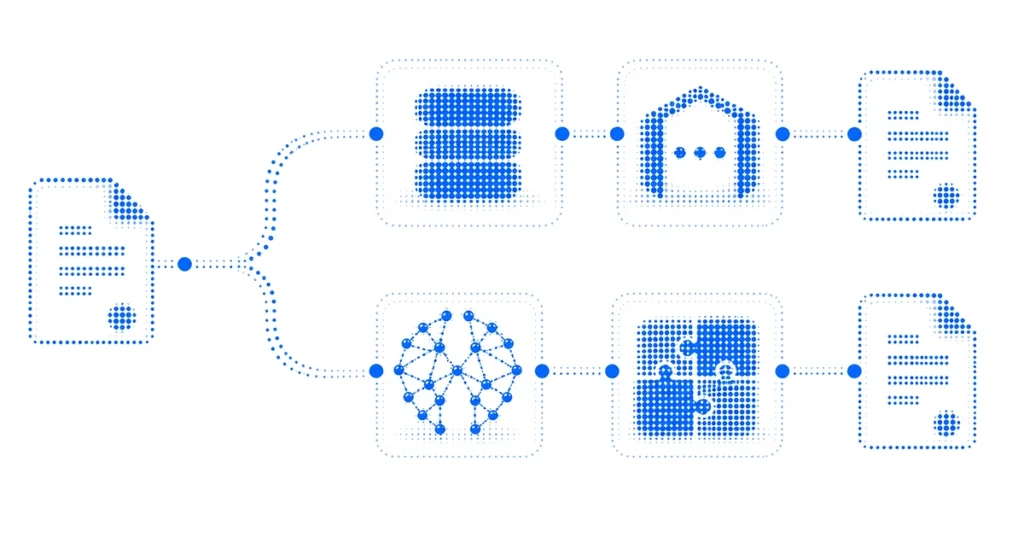
The Skyflow data privacy vault and LLM Capsule address adjacent parts of an AI data path through different operating models. Skyflow documents a privacy-vault pattern that de-identifies sensitive data, stores detected entities and tokens in a vault, and controls re-identification. LLM Capsule creates a protected working version, keeps original values and the internal mapping inside the customer environment, and performs Reconstruction there after the approved model runs.
The useful comparison is the complete return path. Skyflow supports three deployment models, so an API call alone does not show where data travels or whether infrastructure is shared. Architecture teams need to identify the selected deployment, service operator, and mapping location. They also need the authorization path and output destination before they can judge either design. The broader cloud-vault category comparison explains the general trade-off. This article focuses on Skyflow's documented return pattern.
Key takeaways
- Skyflow documents multi-tenant SaaS, Virtual Private Skyflow, and BYOC.
- Its de-identification pattern stores detected entities and tokens in a vault for controlled re-identification.
- LLM Capsule keeps originals and its internal mapping inside the customer environment and performs Reconstruction there.
- Compare the deployed return path and operating responsibility, not the product labels alone.
Are LLM Capsule and Skyflow the same type of product?
They address adjacent jobs. Skyflow describes a data privacy vault with tokenization, de-identification, policy-based access control, and controlled use of sensitive data. LLM Capsule describes a context-preserving data layer for AI workflows. It creates the protected working version that reaches an approved model and rebuilds the reconstructed output inside the customer's environment.
The overlap appears when an AI workflow needs protected input and a usable response. Both patterns can substitute sensitive values before a model sees them. The architectural split appears when the workflow needs the real values again. Skyflow's documentation describes re-identification and detokenization through vault capabilities. LLM Capsule defines Reconstruction as an in-environment operation that reads an internal mapping after the model responds.
Those terms should remain separate. Detokenization and re-identification name Skyflow mechanisms. Reconstruction names the LLM Capsule capability. Treating them as synonyms would hide different deployment and operating assumptions.
Does an API mean Skyflow re-identification is public cloud?
No. An API defines an interface, while the selected deployment defines the infrastructure and network boundary. Skyflow documents three models in its deployment guide: multi-tenant SaaS on shared infrastructure, Virtual Private Skyflow in a dedicated VPC managed by Skyflow, and BYOC in the customer's AWS or GCP account. The guide also covers private connectivity for all three models.
That distinction changes the review. A multi-tenant SaaS deployment and a BYOC deployment do not place infrastructure, IAM, or network responsibility in the same hands. Skyflow states that the customer owns the BYOC infrastructure and controls IAM and data residency while Skyflow operates the service. A reviewer should record that responsibility model instead of labeling every API call external.
The roadmap phrase re-identification by API remains accurate as a mechanism description when it refers to the documented endpoint. It should not stand in for the full trust boundary.
Skyflow's documented return mechanisms
Skyflow documents two related return mechanisms. Its de-identification guide covers text and file re-identification under role-based controls. Teams can store detected sensitive information in the vault and later control access to the associated tokens.
Skyflow's Detokenize API accepts structured vault tokens at an authenticated endpoint. The request includes a redaction setting, and the response returns the corresponding records. The architecture review should capture the vault URI, access token, policy, and requested redaction mode.
The LLM protection pattern applies this model to AI input and output. Skyflow describes a Detect vault that stores detected entities and tokens, with roles and access controls governing re-identification. This gives teams a documented vault-centered control point for sensitive values.
LLM Capsule's in-environment Reconstruction path
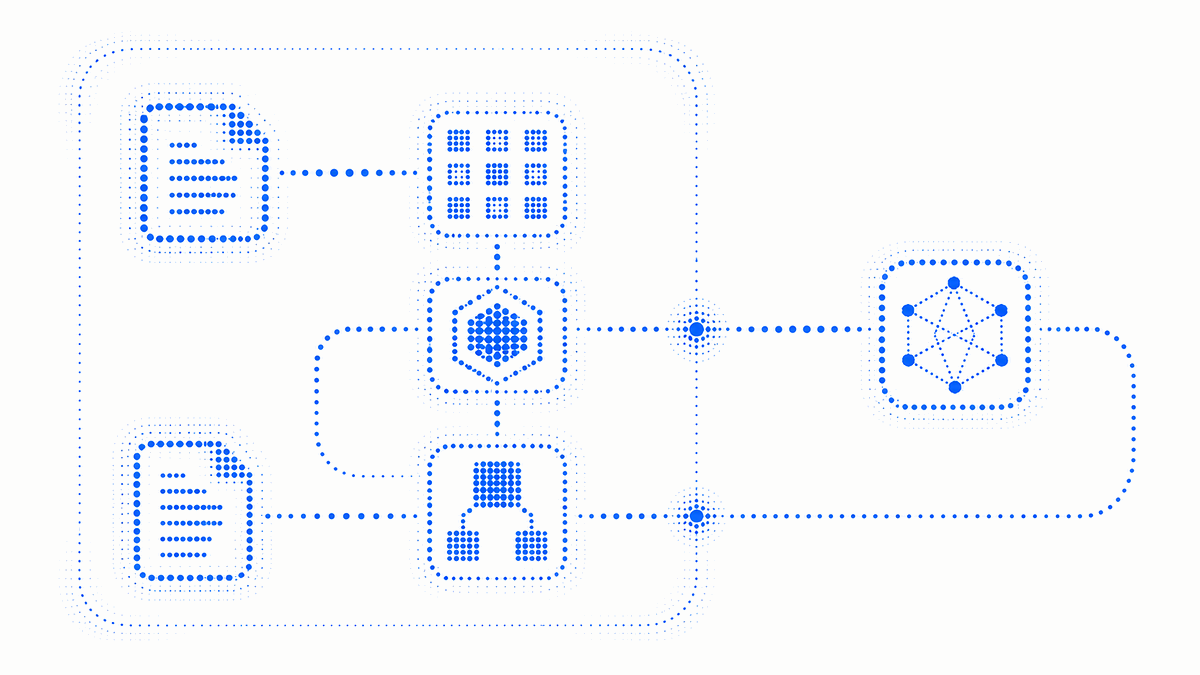
LLM Capsule keeps the return operation with the customer-controlled workflow. The product creates a protected working version, sends that version through an approved model path, and then uses an internal mapping to perform Reconstruction inside the customer environment. The original values and mapping stay inside that environment.
The architecture overview places this capability after the model path and before the result returns to the originating system. The reconstructed output can therefore contain the real circuit IDs, ticket IDs, figures, or other authorized operational markers required by the workflow.
The production Reconstruction guide covers model-generated output rather than a static database lookup alone. It describes inline, streaming, and event-driven integration patterns, plus failure cases such as malformed or hallucinated token-shaped strings. Those behaviors affect output validation and incident handling.
LLM Capsule vs Skyflow: which fields should you compare?
The table compares documented architecture patterns, not security scores. Skyflow behavior depends on the selected deployment and configuration. LLM Capsule behavior depends on the approved customer-environment topology and workflow integration.
Documented patterns and the questions an architecture team still needs to validate
Architecture review checklist
Start with the return operation and work outward. Record the answers for the exact deployment under review.
- Which system stores the original values and token or marker mapping?
- Who operates that system in the selected SaaS, dedicated VPC, BYOC, on-prem, or air-gapped topology?
- Which identity can request plaintext, redacted, or reconstructed output?
- Which network path carries the request and the returned values?
- Which system receives the usable output, and can logs or retries copy it elsewhere?
- How does the workflow handle malformed references, policy denial, timeouts, partial output, and model-generated token-shaped strings?
- Which audit record proves who triggered the return operation and where the result went?
The input side deserves the same care. Skyflow documents support for standard sensitive data, custom regex patterns, several token formats, and multiple file types. LLM Capsule uses customer-defined operational markers in addition to standard PII. Teams should test the real circuit IDs, asset references, ticket structures, or other records the target workflow uses. Before locking the return design, review the input-side tokenization choices.
Which pattern fits your workflow?
Skyflow fits a team that wants a privacy vault as the central control plane for sensitive data, policy, de-identification, and controlled re-identification. The deployment choice then determines how much infrastructure and network control the customer holds.
LLM Capsule fits a team that needs a context-preserving data layer within its AI workflow and requires original operational values plus the internal mapping to remain inside the customer environment. Reconstruction completes the round trip before the result returns to the originating workflow.
Some enterprise designs may contain both a privacy vault and a separate AI data layer. This article does not claim a tested Skyflow and LLM Capsule integration. A combined design would need an explicit system-of-record, mapping, authorization, and audit contract.
The decision rule is concrete: choose the documented pattern whose deployed return path matches your control boundary and operating model. Validate that choice with one real workflow, including denied requests and failure cases, before treating a diagram or product label as proof.