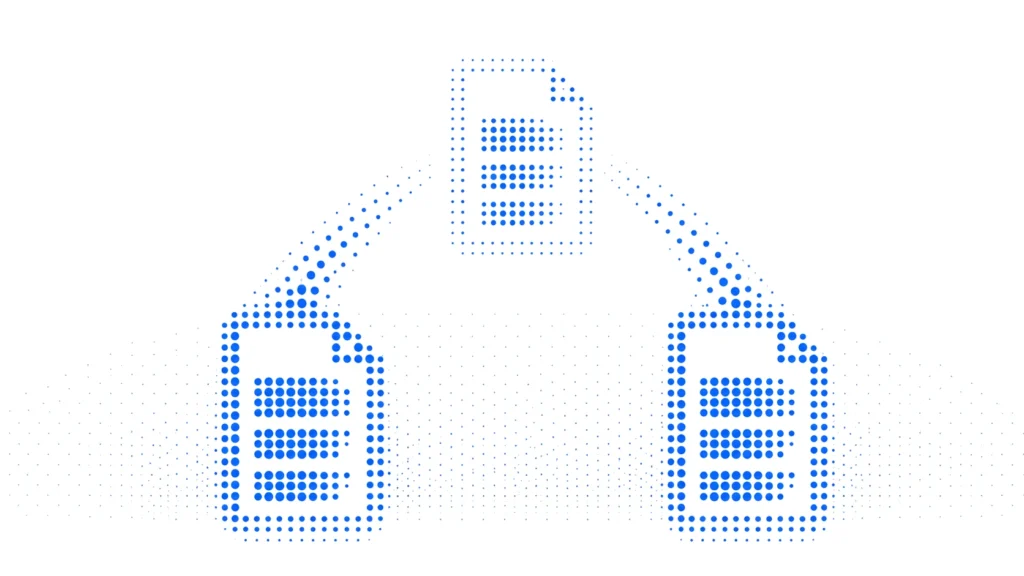
An on-prem data privacy vault alternative changes where the sensitive-data return path runs. A cloud vault can isolate and govern defined sensitive fields through a selected service deployment. LLM Capsule instead creates a protected working version, sends it through an approved model path, and performs Reconstruction inside the customer environment.
The decision depends on the complete data path. Teams need to locate the original values, tokens or stand-ins, reconnecting information, model request and response, logs, retries, and final usable output. Product category labels alone do not answer those questions.
Key takeaways
- A vault and local Reconstruction can both protect sensitive values, but they place the return operation in different locations.
- Cloud vault deployment models vary. Multi-tenant SaaS, private, and BYOC configurations must be reviewed separately.
- Local deployment does not remove governance work. Teams still need access, lifecycle, logging, and failure controls.
For LLM Capsule's deployment boundary and supported model paths, see the architecture overview. This article applies that architecture to a narrower comparison: external vault operations versus in-environment Reconstruction.
What does a data privacy vault do?
A data privacy vault separates sensitive values from the applications that use them. Applications send data to the vault, receive tokens or protected forms, and request authorized values through the vault's controls and APIs.
Skyflow's product overview describes isolation, protection, governance, and controlled use as the core vault functions. The same documentation lists multi-tenant SaaS, Virtual Private Skyflow, and Bring Your Own Cloud deployments. A cloud-vault review therefore needs the selected deployment model, not a generic assumption about where the vault runs.
The return operation also matters. Skyflow's Detokenize API accepts tokens through an authenticated vault endpoint and returns the corresponding records according to the requested redaction mode. The request route, service identity, policy evaluation, and output destination all belong in the architecture review.
Google Cloud Sensitive Data Protection shows another reversible pattern. Its pseudonymization documentation distinguishes deterministic encryption and format-preserving encryption from one-way hashing. Re-identification of reversible values depends on the required token context and cryptographic material.
Vaults can be the right choice when an organization approves that service boundary and wants centralized governance for defined sensitive fields. The term vault does not reveal the deployment, control plane, logging path, or support-access model by itself.
Where does the architecture change for restricted operational data?
The architecture changes when an organization cannot send original operational values or reconnecting information through an external return path. Policies, contracts, network isolation, and customer-defined operational markers can all create that constraint.
Operational data extends beyond standard PII. An incident workflow may need circuit IDs, topology nodes, OT asset identifiers, internal hostnames, ticket references, runbook commands, or account-specific figures. These values may not match a generic personal-data detector, yet the model still needs their relationships to analyze the record.
Removing every marker can destroy that structure. A network investigation, for example, may depend on the relationship between a circuit, edge node, incident, and route. The model needs a stable protected representation of those relationships even when it cannot receive the original values.
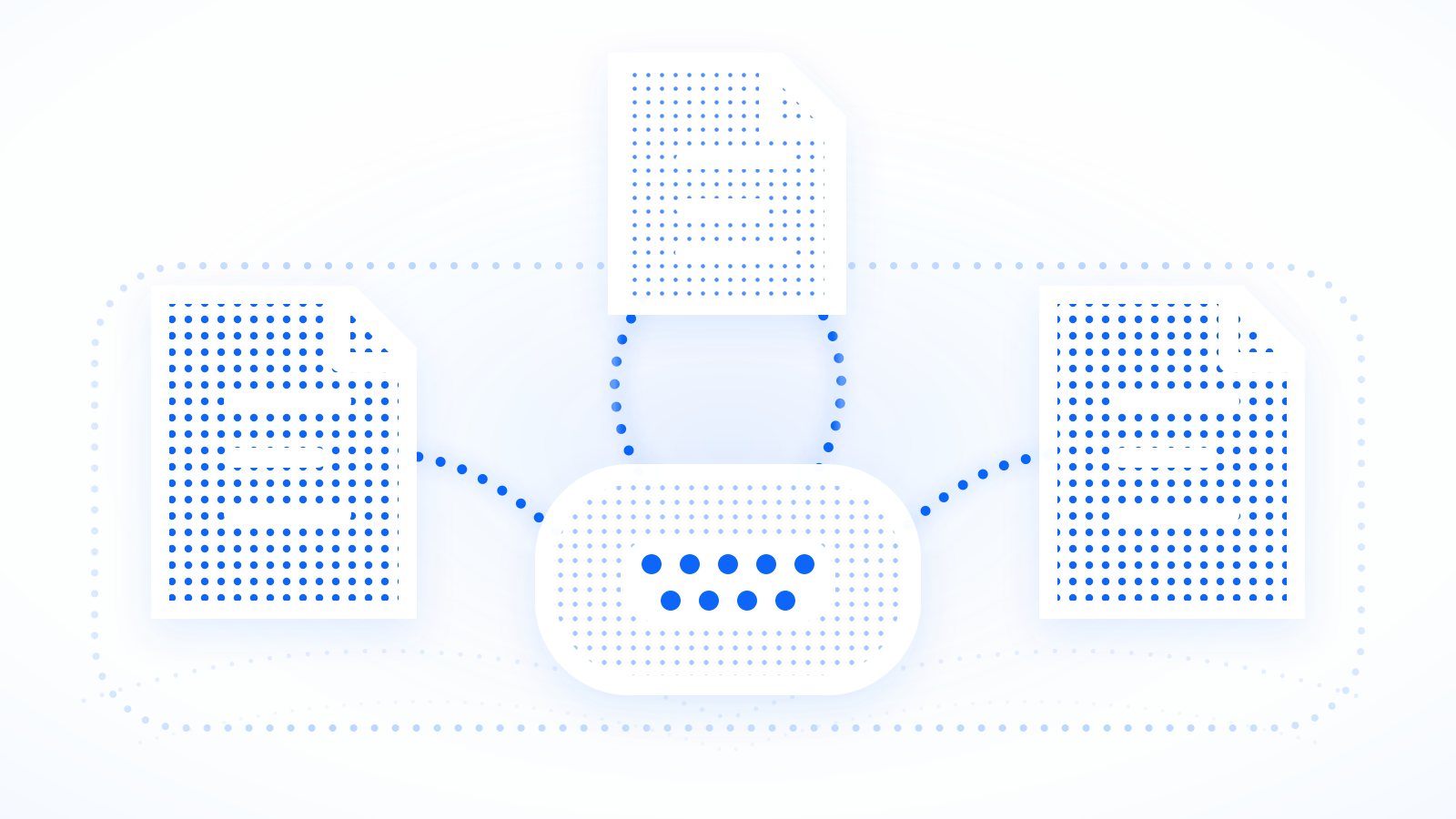
The diagram is a review map, not a product scorecard. Its purpose is to keep teams from checking only the outbound prompt while overlooking the information that can reconnect protected values to the originating workflow.
How does in-environment Reconstruction work?
LLM Capsule creates the protected working version and the internal mapping inside the customer environment. The approved model works on the protected version. LLM Capsule then validates the returned markers and reconstructs authorized operational values locally.
The flow has three stages:
- Substitute. Policy-defined sensitive values and operational markers become consistent stand-ins. Their task-relevant relationships remain intact.
- Run the approved model. The model processes the protected working version through the route that the organization has approved.
- Reconstruct locally. The internal mapping resolves valid stand-ins and returns a reconstructed output to the authorized workflow.
The mapping separates this pattern from an external detokenization call. In the LLM Capsule design, the reconnecting information stays with the customer-controlled component rather than travelling to a separate service for the return operation.
Deterministic Reconstruction applies to mapping resolution, not to model generation. A valid stand-in maps to the same authorized value within its defined scope. A model can still omit, alter, or invent a marker, so the return path needs validation and explicit failure handling.
For a deeper explanation of stable stand-ins and mapping choices, read Tokenization for LLM Inputs: How AI Reads What It Doesn't See.
Cloud vault and local Reconstruction compared
This comparison evaluates architectural location and operating responsibility. It does not assign a universal winner. A BYOC vault can create a different boundary from multi-tenant SaaS, and a local component can still be configured poorly.
External vault operations and in-environment Reconstruction
Teams should verify every row against the deployment they intend to operate. Vendor documentation, contracts, network diagrams, log samples, and a traced workflow provide better evidence than category-level claims.
When does a data privacy vault fit?
A data privacy vault fits when the organization accepts the chosen service boundary and wants a centralized system for isolating, governing, and selectively revealing defined sensitive fields.
The pattern is a strong candidate when:
- applications already use the vault's schema and APIs;
- the chosen SaaS, private, or BYOC deployment meets location and isolation requirements;
- policies and service identities can govern which values are returned;
- the workflow can depend on the vault service for the return operation;
- tokenization, retrieval, and detokenization match the application's data model.
The review must use the vendor's current documentation and the organization's exact configuration. A capability documented for one deployment tier should not be treated as proof for another.
When does local Reconstruction fit?
Local Reconstruction fits when original operational values and the reconnecting path must stay inside the customer environment, while an approved AI model still needs a structurally useful record.
The pattern is relevant when:
- the workflow contains customer-defined operational markers;
- repeated references must stay consistent through model processing;
- the return operation cannot depend on an external vault API;
- the environment is on-prem, VPC-isolated, or air-gapped;
- the reconstructed output must return to an internal ticketing, NOC, document, RAG, or operations workflow.
Local placement does not replace governance. Teams must define detection policy, mapping scope, access control, expiration, audit records, malformed-output handling, and downstream authorization. They also need to inspect integrations and telemetry for unintended copies of originals or reconnecting information.
What should teams verify before choosing?
Trace one representative record through the complete outbound and return path. Record the evidence for each answer.
- Which values are sensitive under policy, including non-PII operational markers?
- Where are the original values processed and stored?
- Where do tokens, mappings, keys, and reconnecting information reside?
- What exact request crosses the approved model boundary?
- How does the system keep repeated references consistent?
- Where does retrieval, re-identification, detokenization, or Reconstruction run?
- Which identity can return which values to which output fields?
- What appears in service logs, model telemetry, traces, retries, caches, and errors?
- What happens when the model changes, omits, or invents a stand-in?
- Can the complete path operate under the required network constraints?
The UK ICO's pseudonymisation guidance provides a useful governance principle for personal data: additional information that reconnects pseudonyms to people must be held separately and protected. That jurisdiction-specific guidance does not select a product or establish compliance. It does show why mappings, keys, vault records, and Reconstruction permissions belong in the design review.
The decision rule
Choose a cloud vault when its verified deployment, API path, and governance model fit the workflow. Choose in-environment Reconstruction when original operational values and reconnecting information must remain inside the customer boundary throughout the AI round trip.
Both choices require evidence from the real deployment. Trace the data path, inspect the telemetry, test failure behavior, and confirm who can authorize the final output.